

What Is a Thread Lift? What Does It Lift, How Long Does It Last, and Who Is It For?

A thread lift is a procedure where a physician inserts medical-grade threads beneath the skin to support and reposition sagging tissue, without the large incisions of surgery.
Thread lift results come from two main mechanisms:
- Mechanical support from barbs or structural elements on the thread, producing visible lift immediately after treatment
- Tissue response around the thread, involving collagen formation and remodeling over time
Thread lifts suit mild-to-moderate sagging — early cheek drooping, more visible nasolabial folds, or a less defined jawline — but can't replace a facelift in patients with significant excess skin and sagging.
Dr. Punyanun emphasizes that the key to good results isn't "using the most threads possible" — it's assessing facial structure, where tissue has dropped, the correct vector of pull, thread type, and physician experience.
1.What Is a Thread Lift?
A thread lift is a minimally invasive facial lifting procedure using medical-grade threads inserted beneath the skin's tissue layers.
Threads used for lifting typically have barbs, cones, or anchoring elements that grip tissue and transfer force to the area needing support — different from smooth, fine threads that focus more on tissue stimulation than lifting.
Common absorbable thread materials in aesthetic medicine today include:
- PDO (polydioxanone)
- PLLA (poly-L-lactic acid)
- PCL (polycaprolactone)
- Composite materials such as PLLA-PCL or PLACL
Each material differs in mechanical properties, elasticity, absorption timeline, and tissue response pattern — so material name alone shouldn't be the deciding factor.
2.What Can a Thread Lift Help With?
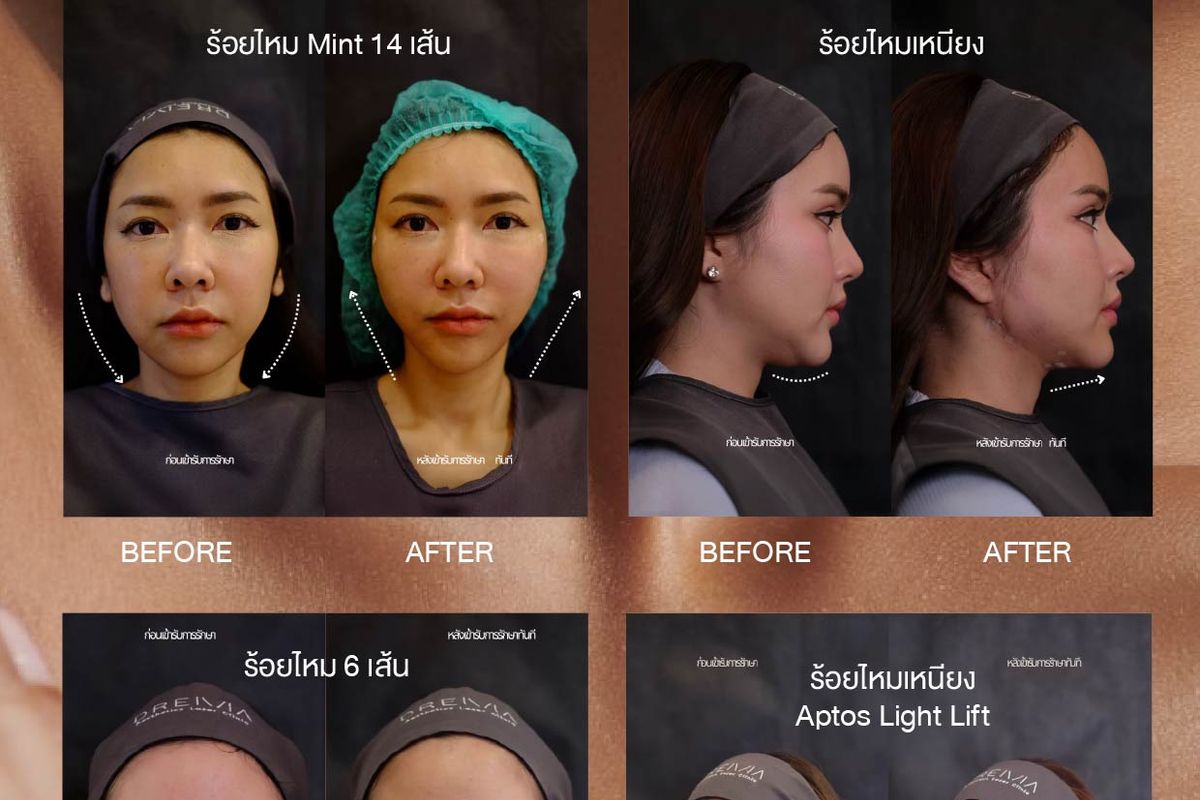
- Supporting early cheek sagging. With age, fat and tissue in the cheek area move downward, making nasolabial folds more visible and the midface look heavier. A thread lift may help reposition the descended fat, lifting it back into place in patients with mild-to-moderate sagging.
- Making the jawline look more defined. Lifting tissue in the lower cheek and jawline area may create a more continuous facial contour, especially for those with mild cheek sagging. However, if jawline definition is affected by submental fat, neck muscles, jaw bone structure, or excess skin, a thread lift alone may not address the full root cause.
- Softening folds caused by descended tissue. Lifting tissue upward can soften nasolabial folds and marionette lines in some patients, but threads aren't fillers and can't directly replace lost volume.
- Adjusting facial contour without major surgery. Thread lifts involve smaller incisions and shorter recovery than a facelift, but results, durability, and the ability to address significant sagging are also more limited than surgery.
3.Can a Thread Lift Really Slim the Face?
A thread lift doesn't remove fat or make facial bones smaller — but supporting the cheeks and lower tissue upward may make the jawline appear more defined and the face look slimmer from certain angles.
How much effect is visible depends on the underlying cause of facial shape:
- If caused by cheek sagging, a thread lift may help
- If caused by prominent jaw muscles, muscle-reducing approaches may need consideration
- If caused by fat accumulation, fat volume and location need assessment
- If caused by bone or volume loss, other structural restoration may be needed
- If there's significant excess skin, surgery may give clearer, more appropriate results
So "a large face" or "not looking slim" doesn't mean everyone should get the same thread lift treatment. Dr. Punyanun believes the most important step before a thread lift is always correctly diagnosing the true cause of the concern.
4.Conclusion
A thread lift is one tool for facial lifting, combining mechanical support with the tissue's biological response. It suits mild-to-moderate sagging, isn't a volumizing filler, and isn't a substitute for a facelift. Good results depend on correctly diagnosing the underlying problem and choosing the appropriate thread type and vector — not the number of threads used.