

1.A Common Misconception: Thread Lifting Works the Same Way for Everyone
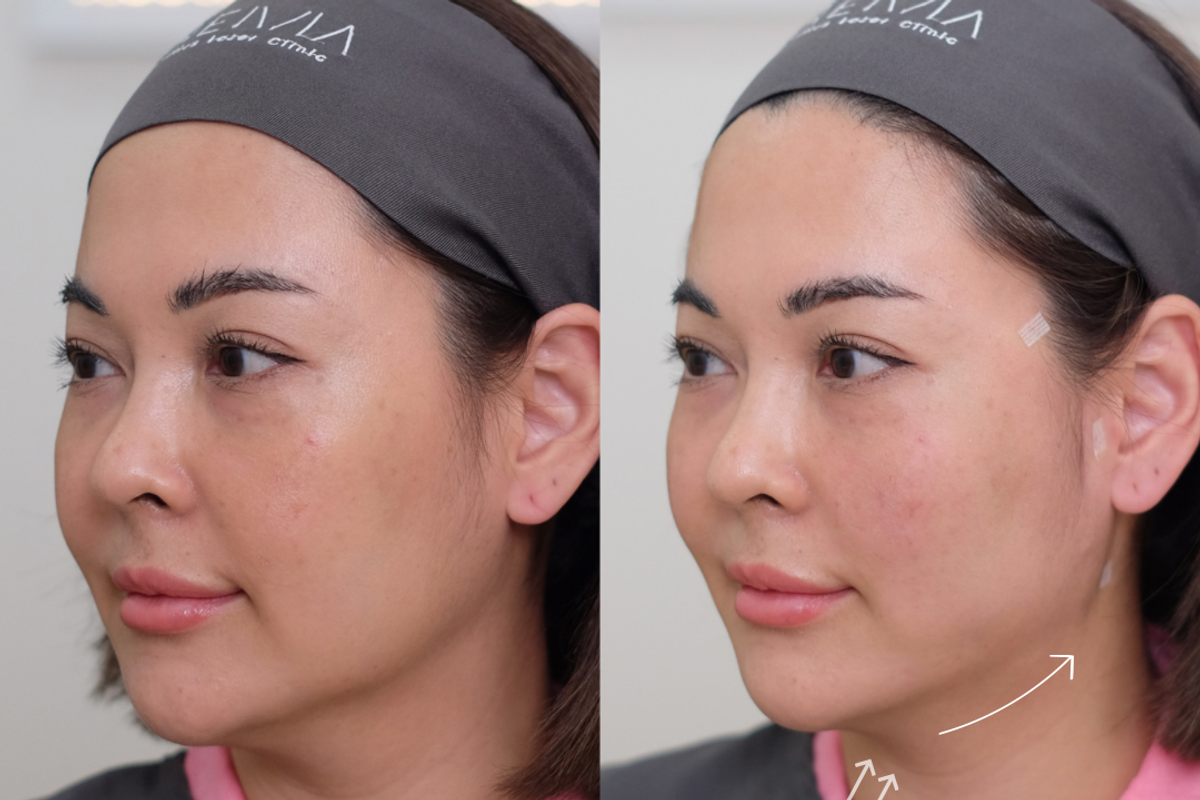
Mor Pun often sees patients who come in expecting the same results they saw in someone else's review. In reality, thread-lift outcomes depend heavily on individual facial structure. A literature review published in Dermatologic Surgery in 2019, which compiled evidence on the safety and efficacy of thread lifting using barbed sutures, states clearly that while thread lifting plays a significant role among minimally invasive facial rejuvenation techniques, additional studies are still needed to better evaluate its long-term safety and efficacy — reflecting that thread lifting isn't a one-size-fits-all procedure with guaranteed identical results for everyone.
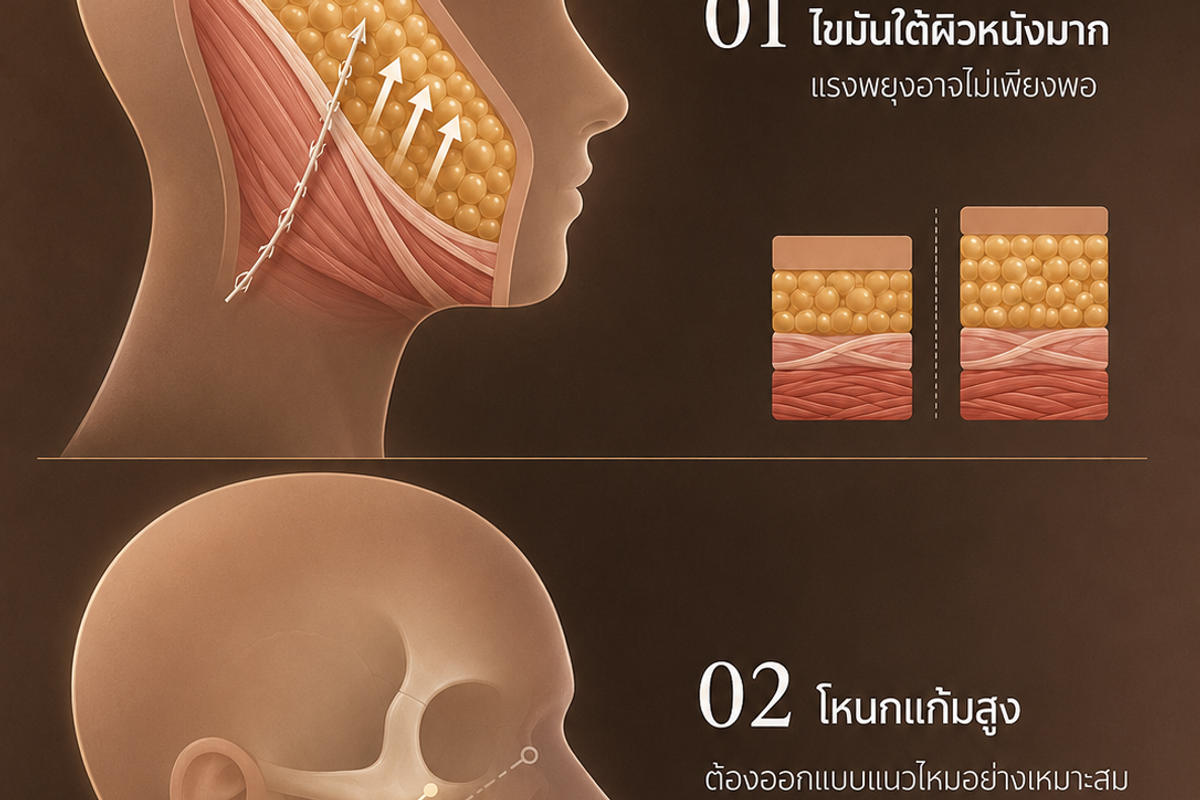
- Group One: Those With a Large Amount of Subcutaneous Fat
The first point Mor Pun wants to explain is that those with a large amount of subcutaneous fat are typically a group where thread-lift results may be less pronounced than expected.
The principle is that thread pulling force has limits in how much tissue weight it can support. When an area to be lifted carries substantial accumulated fat, the thread's pulling force may not be sufficient to lift all that tissue with clearly visible results — unlike those with less subcutaneous fat, where thread pulling force typically produces more noticeable change.
This is a key reason why, before deciding on thread lifting, a physician needs to thoroughly assess the amount and position of subcutaneous fat, so patients can have reasonable expectations about results. In some cases, a physician may recommend considering other procedures alongside thread lifting, such as managing fat in that area before or after the thread lift, to achieve results better aligned with patient expectations. - Group Two: Those Who Already Have Prominent Cheekbones
The second point Mor Pun wants to particularly emphasize is that those who already have prominent cheekbones and don't want their cheekbones to appear larger are a group requiring especially careful thread-lift planning.
The key mechanism to understand is that thread lifting partly works by repositioning fat from one point to another, not by reducing overall fat volume. When a standard thread lift pulls fat from the lower cheek area upward, in someone who already has prominent cheekbones, the fat pulled upward adds to an area that already carries substantial volume, potentially making the cheekbones appear more prominent than before — even though the overall facial contour looks firmer.
For this reason, in this group of patients, physicians typically need to design a more complex vector than usual, and in many cases may need to use more threads than usual, to distribute pulling force in multiple directions in a balanced way — firming tissue without concentrating volume excessively at the cheekbone area. This differs from the notion that more threads is always better; in this case, a higher thread count results from individual anatomical necessity, not a standard applied to everyone.
2.Why Facial Structure Assessment Before Thread Lifting Matters Most
From both cases above, it's clear that thread lifting doesn't produce identical results for everyone — it depends on several individual factors: the amount and position of subcutaneous fat, cheekbone prominence, overall facial proportions, and each person's specific goals for particular areas.
A thorough facial structure assessment before planning thread lifting therefore isn't a step to skip, since it's the starting point for determining which type of thread lift suits each patient, how many threads and vectors are needed, or — in some cases — that thread lifting alone isn't the most suitable answer, and other procedures may need to be considered alongside or instead.
3.A Point Mor Pun Wants to Emphasize
Mor Pun wants everyone to understand that when a physician recommends additional procedures, more threads than expected, or advises that thread lifting may not be suitable in certain cases, this doesn't mean the physician is trying to sell additional treatment. It's the result of an honest facial-structure assessment, aimed at giving patients the most reasonable and natural results suited to their own facial structure.
4.Closing Summary
Thread lifting isn't a one-size-fits-all procedure. Those with a large amount of subcutaneous fat may see less pronounced results than expected, while those who already have prominent cheekbones may need a more complex vector design and higher thread count to prevent unintentionally enlarging the cheekbone appearance. The most important step before deciding on thread lifting is consulting a physician to assess whether your facial structure is suitable — and if so, how to plan for the best results without distorting facial proportions.