

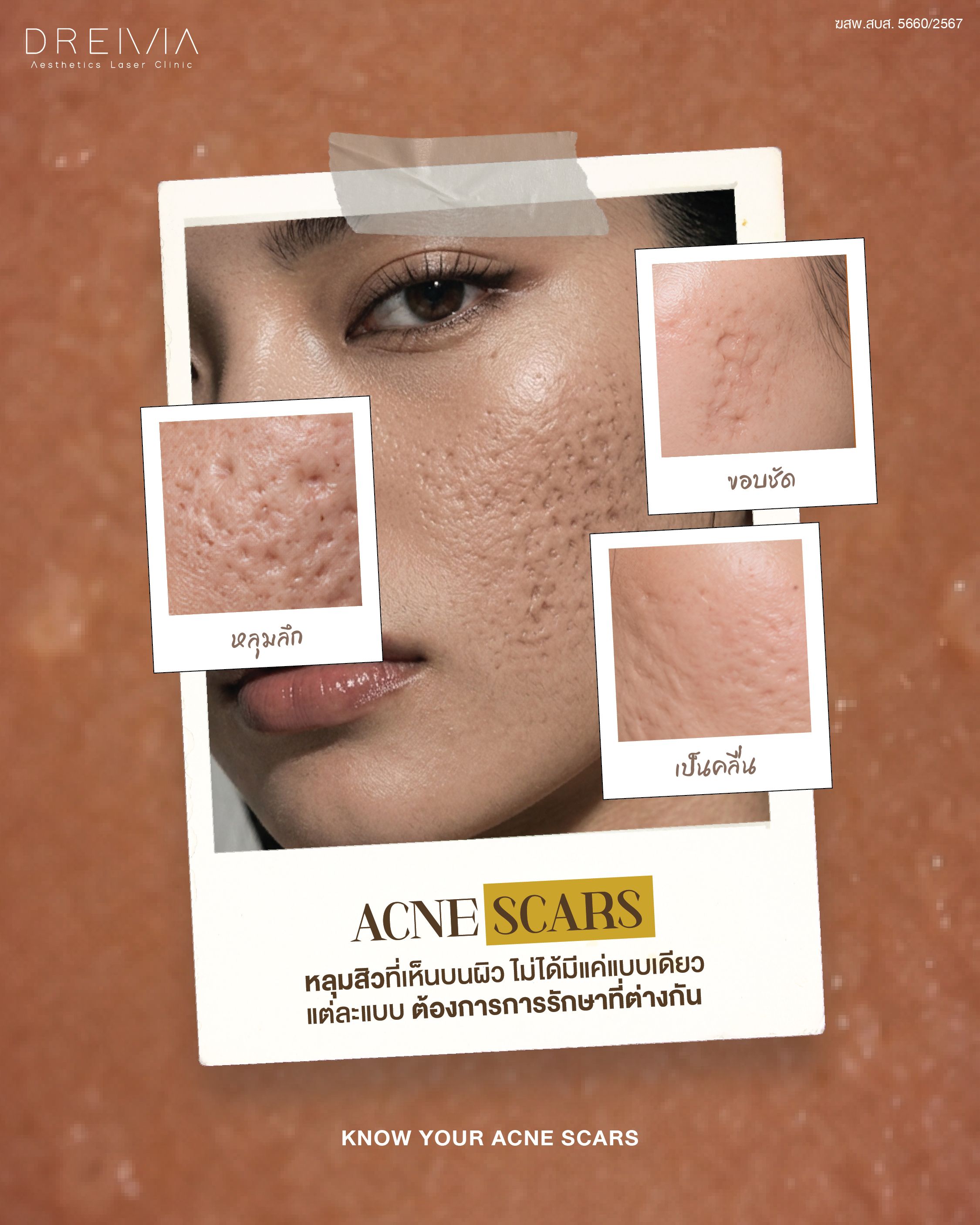
Types of Acne Scars: Why Targeted Treatment Matters — There's No One-Size-Fits-All Solution
By Dr. Punyanun Boonchaya (Mor Pun) | M.Sc. Dermatologist, Drema Clinic Aesthetics & Laser
1. There Are 3 Main Types of Acne Scars
Atrophic scars are the most common type, making up the majority of all acne scars, and are further divided into 3 subtypes:
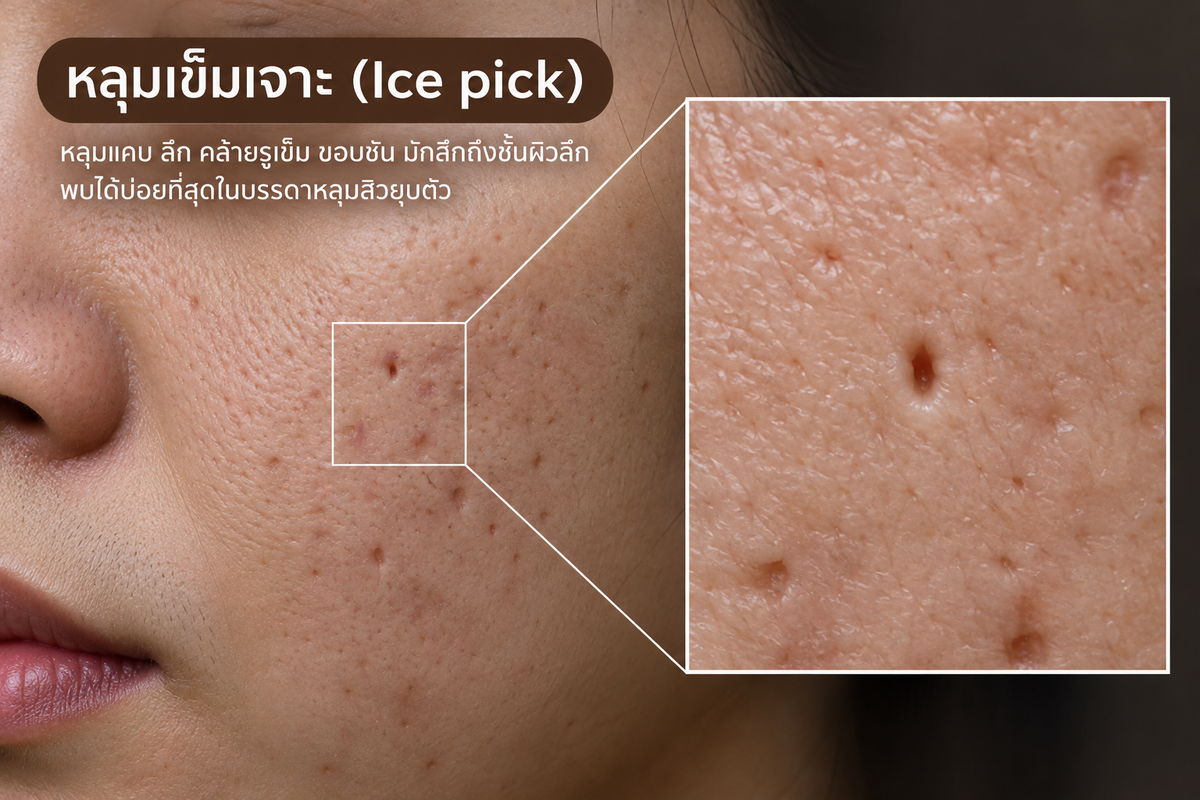
- Ice pick scars — narrow, deep, needle-like depressions with steep edges, often reaching deep into the skin. This is the most common subtype among atrophic scars.
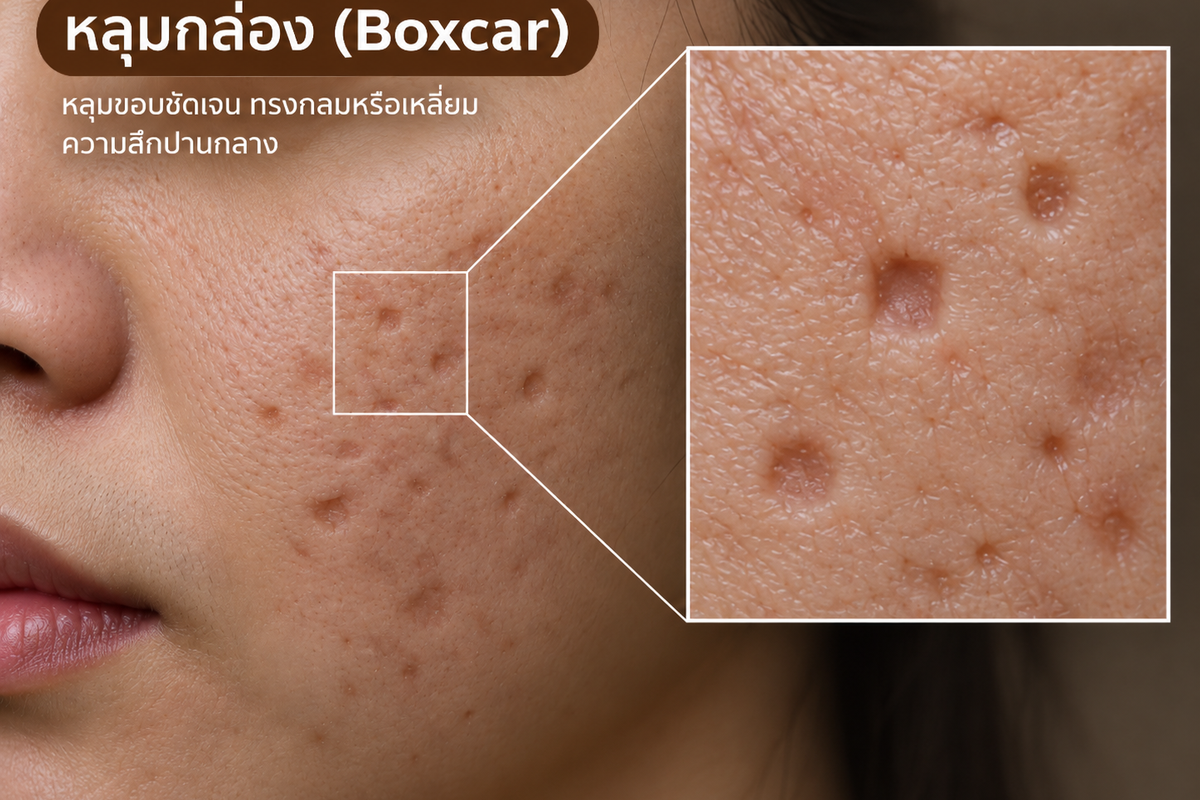
- Boxcar scars — sharply defined, round or angular depressions of moderate depth.
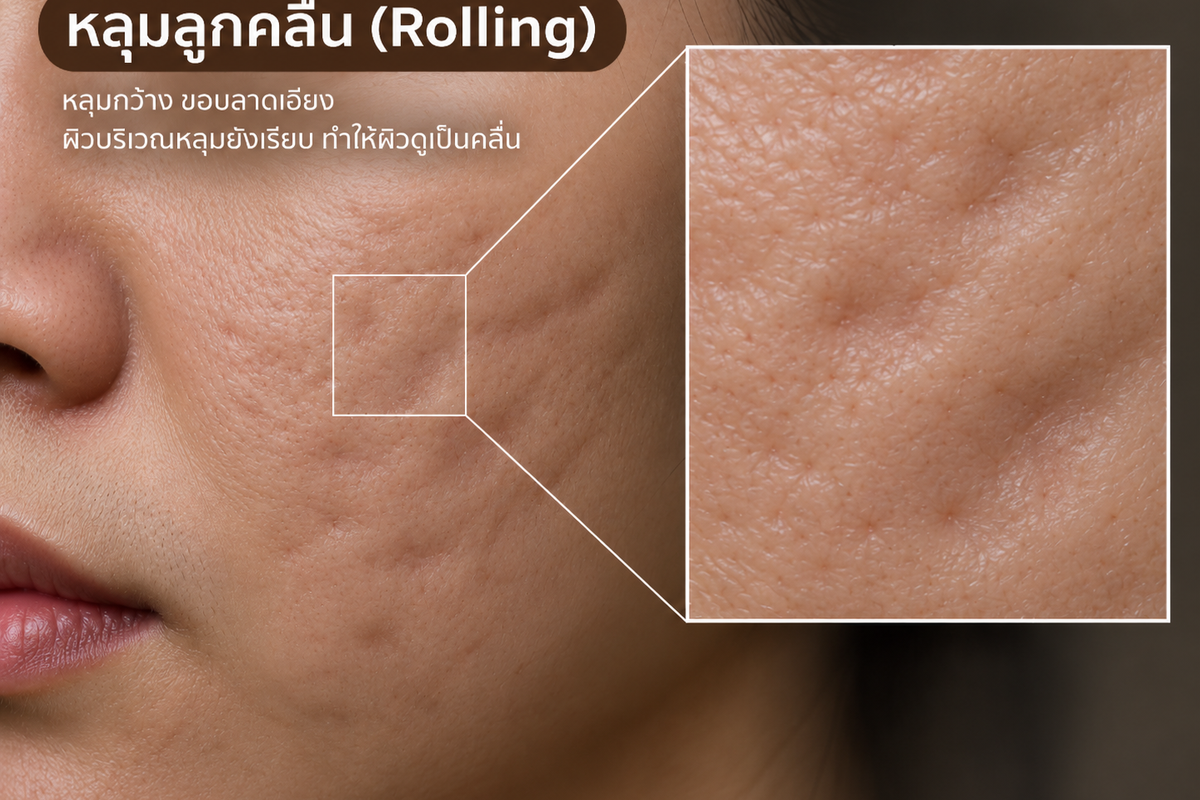
- Rolling scars — broad depressions with sloped edges, where the skin surface at the base remains smooth, giving the skin an undulating, wave-like appearance.
There are also hypertrophic (raised) scars and dyschromic marks (dark or red post-acne marks), which are a different category requiring different care.
2. Why "Assessment First" Matters — Not Choosing a Treatment Yourself
Different scar types respond differently to treatment. For example:
- Ice pick scars often respond well to focal chemical treatment (CROSS) combined with laser.
- Boxcar scars often respond well to ablative fractional laser or microneedling combined with PRP.
- Rolling scars often respond well to subcision (releasing the fibrous tether beneath the skin) combined with filler.
Using the wrong treatment for the wrong scar type not only produces poorer results, but can waste time and money unnecessarily. A physician's assessment before starting treatment is a step that cannot be skipped.
3. Why Repeated Sessions Are Necessary to See Results
Nearly every acne scar treatment — whether laser, microneedling, or filler injection — relies on the body's own collagen production process, which happens gradually rather than all at once from a single session. Repeating treatment on the schedule your physician recommends is necessary for enough collagen to accumulate for a visible change. Patients who expect results from just one session are often disappointed — even though the chosen method may actually have been the right one, simply not yet completed through enough sessions.
4. Summary and Key Takeaway
Acne scars aren't one single thing. Effective treatment starts with clearly identifying the scar type, choosing a method that matches that type, and understanding that repeated sessions on an appropriate schedule are needed to see results. No single method "finishes" everything in one visit.
Dr. Punyanun would like to leave you with this: investing the time for a proper assessment upfront saves both time and money in the long run, far more than rushing into a treatment without knowing your actual scar type.